
Vision
To be a leading catalyst for health equity in Nigeria.
Where evidence-informed solutions create resilient health systems and empower communities.
HealthBridge Solutions Initiative
Evidence-informed public health solutions that strengthen primary healthcare, improve immunization access, and support resilient communities in Nigeria.
Organizational Overview
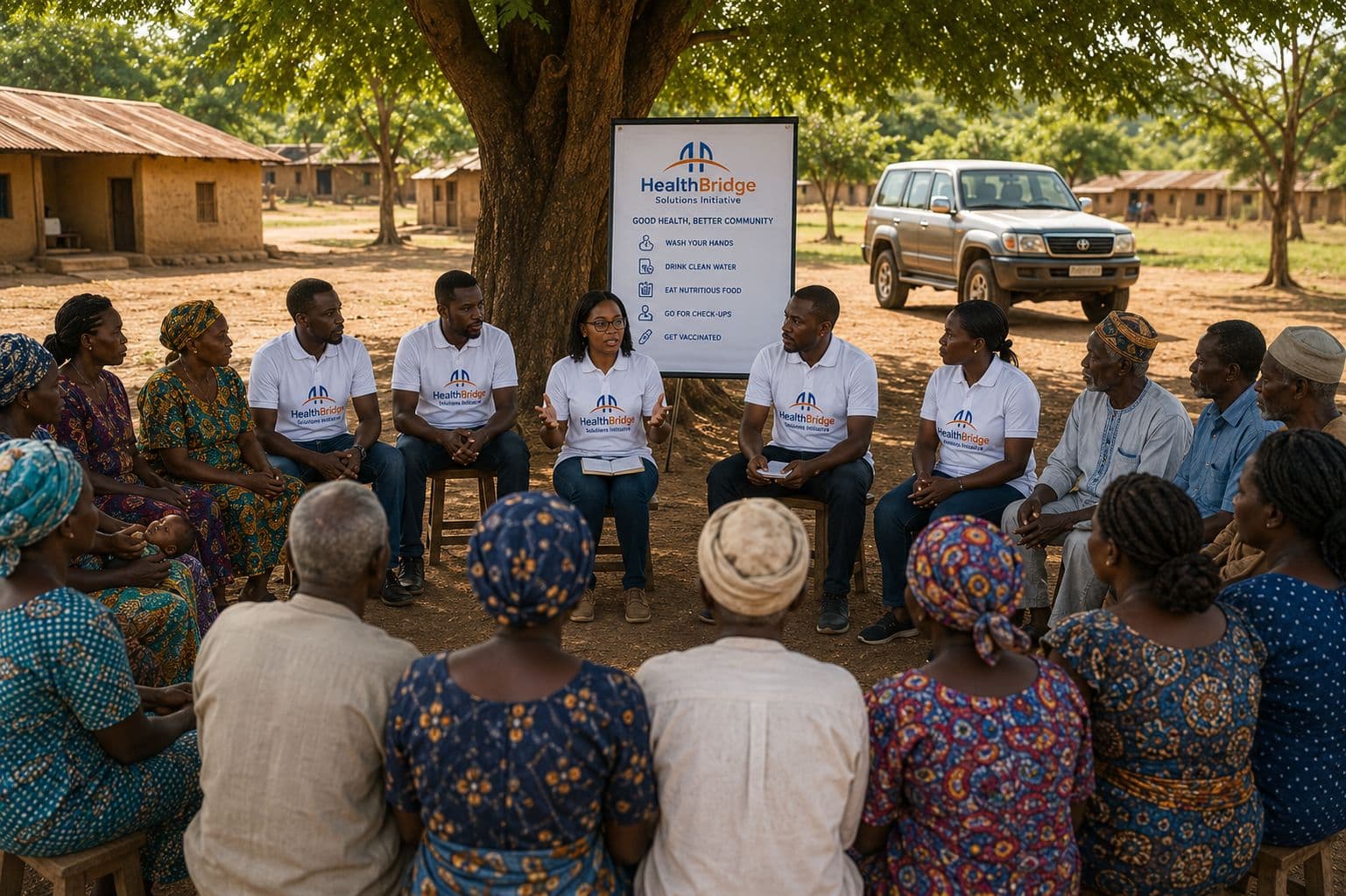
HealthBridge Solutions Initiative (HBSI) is a newly incorporated, non-governmental organization headquartered in Abuja, Federal Capital Territory (FCT), Nigeria.
While our organizational registration is recent, our establishment represents the institutionalization of over two decades of public health leadership and practice in Nigeria.
HBSI was created to bridge the gap between research, policy, and frontline service delivery, translating public health evidence into actionable strategies for health system improvement.
Core Thematic Areas
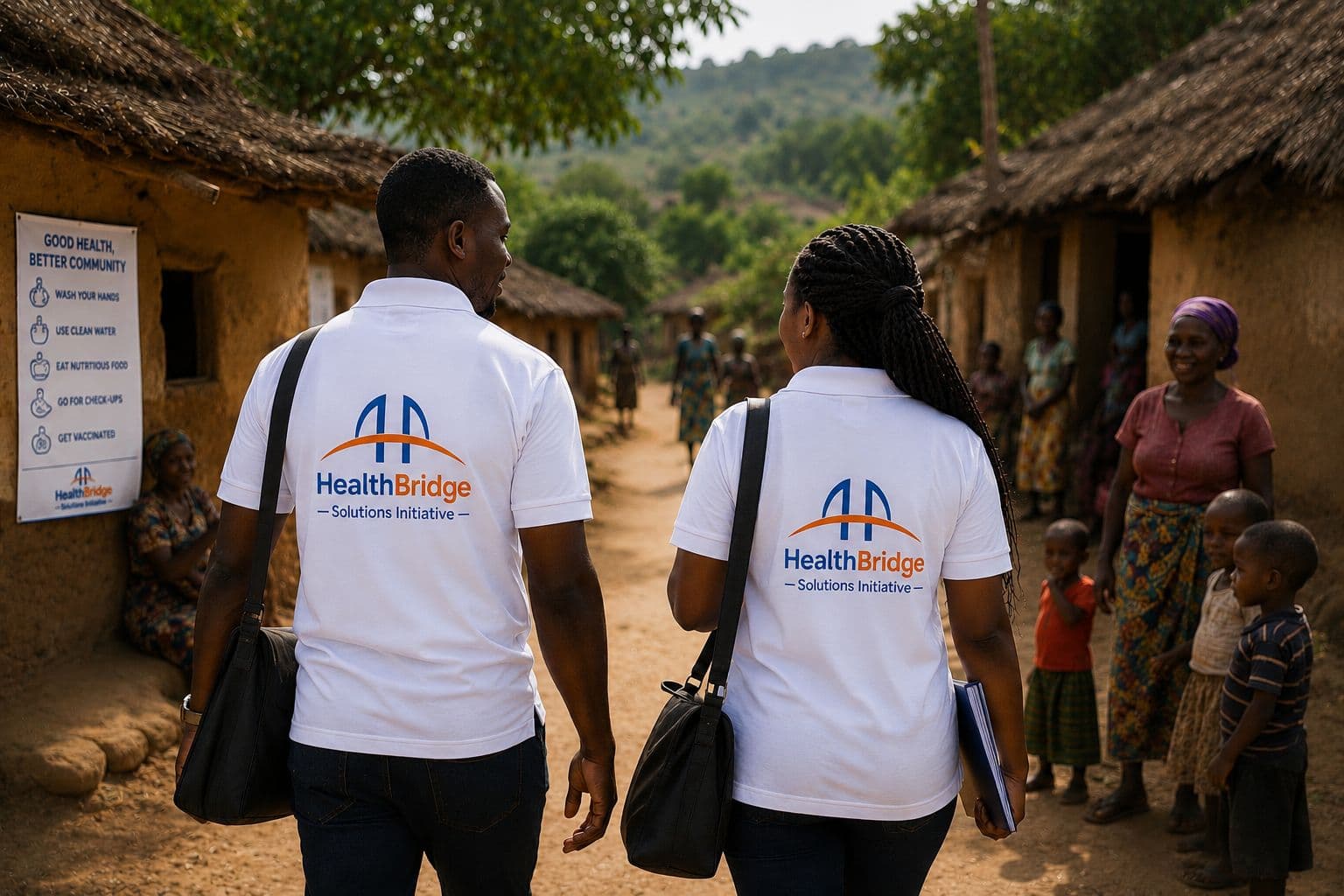
HBSI's work is organized around five connected areas that move from community demand and service delivery to health system governance, data quality, and accountability.

Identifying and reaching zero-dose children through community-based tracking, demand creation, and service delivery strategies.
Integrating immunization into the broader MNCH continuum of care for a life-course approach to health.
Working with government partners to strengthen health systems, improve governance, and enhance primary healthcare delivery.
Designing culturally sensitive communication strategies that promote health-seeking behaviors and build trust.
Improving data quality at facility and community levels, using data for decisions, and promoting accountability for results.
Our Approach
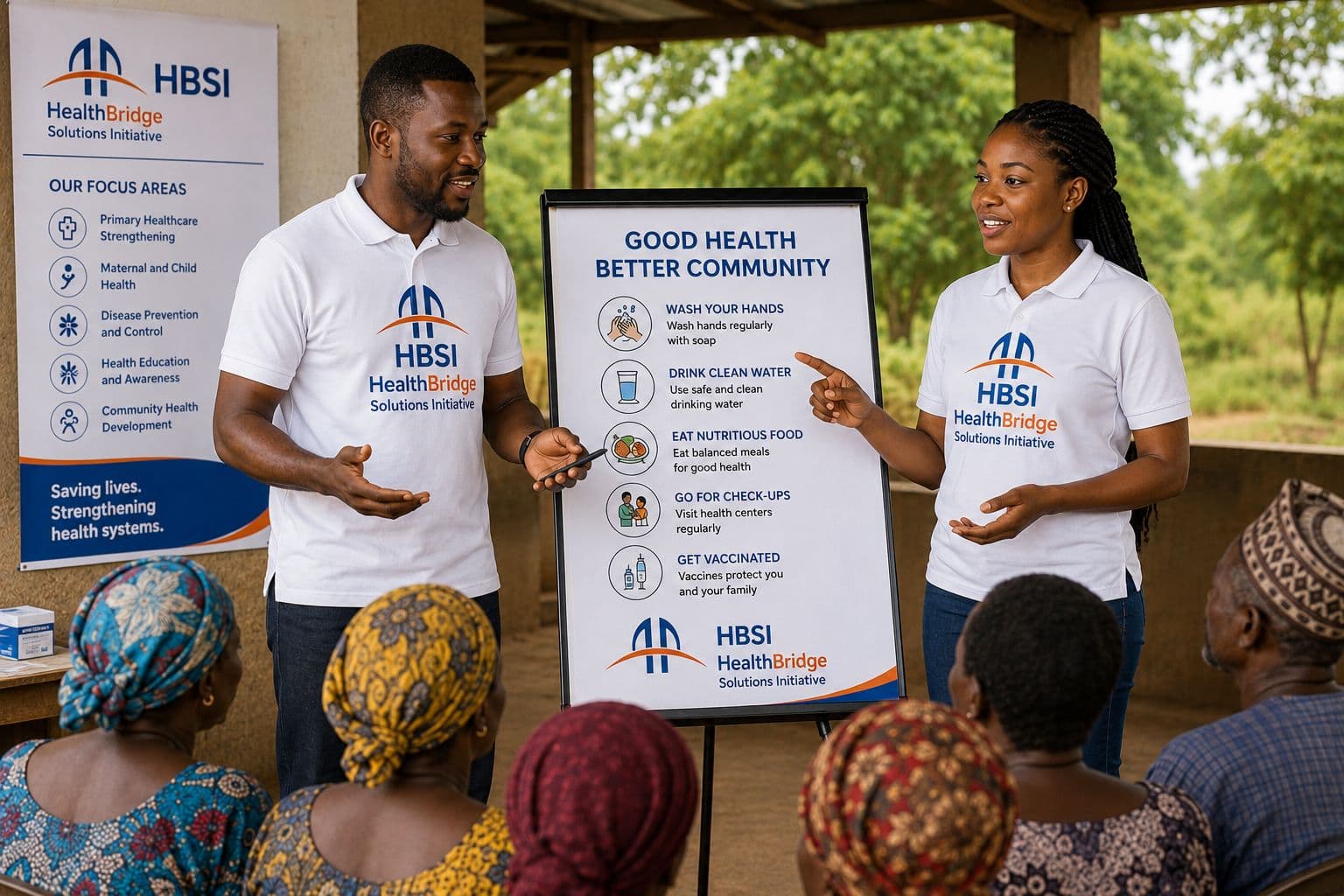
HBSI identifies health system challenges, designs and implements data-driven interventions with communities and government partners, and evaluates results to inform policy and scale-up. Our vision is a Nigeria where every community has access to equitable, high-quality healthcare.
Evidence
HBSI begins by understanding the barriers affecting communities, services, data quality, and primary healthcare delivery.
Action
Programmes are shaped with communities and government partners so solutions are practical, locally relevant, and ready for delivery.
Impact
Learning is used to strengthen accountability, inform policy, and support approaches that can be sustained across health systems.
Vision & Mission
Vision
Where evidence-informed solutions create resilient health systems and empower communities.
Mission
Bridging the gap between communities and formal health systems, with a focus on reaching the most vulnerable populations.
Core Values
These values shape HBSI's work with communities, partners, evidence, resources, and public health systems.
Committed to transparency, results, and responsible stewardship of resources.
Working to reach marginalized and underserved communities.
Upholding data quality and using evidence to guide decisions.
Building strong partnerships with government, communities, and civil society.
Advancing fairness and justice in health so every person has a fair opportunity to thrive.

Leadership & Technical Capacity
HBSI institutionalizes over two decades of public health leadership in Nigeria, connecting academic evidence, government collaboration, and frontline programme delivery.

Founder / Executive Director
Medical doctor, Fellow of the West African College of Physicians, Fellow National Academy of Science (FAS), Fellow Academy of Medical Specialists (FAMedS), and Professor of Public Health, Health Policy and Systems at the University of Nigeria.
Prof. Uzochukwu served as Lead Technical Assistant and Operations Research Specialist for NPHCDA's BMGF-funded NEMCHIC project, coordinating technical assistance across 10 Nigerian states from 2021 to 2024.
His work spans vaccine-preventable diseases, maternal and child health programmes, health systems strengthening, data quality improvement, and accountability for public health results.
He is the pioneer Director of the Institute of Public Health at the University of Nigeria and a board member of Health Systems Global.
Institutional Capacity
Programme leadership grounded in Nigerian primary healthcare, immunization, and health systems practice.
Operations research, impact evaluation, and learning systems that connect delivery to measurable results.
Analysis capacity to identify trends, service gaps, data quality issues, and practical opportunities for action.
Community engagement strategies that support trust, demand creation, and local accountability.
Donor-conscious financial management capacity for transparent programme stewardship.
Partnerships & Strategic Alignment
HBSI's institutional direction is shaped around practical collaboration with public health structures, community networks, and funder priorities that support equitable primary healthcare delivery.

National Primary Health Care Development Agency
NEMCHIC technical assistance experience.
Area Councils & Community Networks
Community engagement and accountability.
Gavi CSO Constituency
Zero-dose and immunization equity alignment.Collaboration Base
While HBSI is newly incorporated, its leadership brings a long history of collaboration with national primary healthcare systems, multi-state technical assistance, and community-facing programme delivery.
The organization is headquartered in the FCT and is positioned to work with primary healthcare structures, area councils, and community networks to strengthen immunization access, trust, and accountability.
Governance & Accountability
HBSI is structured to protect communities, strengthen partner confidence, and ensure that programmes are managed with transparency, integrity, and documented accountability.
Governance Model
Strategic direction, fiduciary responsibility, and stewardship of HBSI's mission and resources.
Day-to-day leadership, programme execution, partner coordination, and operational accountability.
Donor-conscious financial management, reporting discipline, and responsible use of programme funds.
Policy Frameworks
Zero tolerance for abuse, exploitation, or harassment.
Gender equality and social inclusion across programmes and partnerships.
Integrity standards for prevention, reporting, and response.
Responsible handling of programme and personal data in line with NDPR commitments.
Contact HBSI
For partnerships, programme collaboration, technical assistance, and public health enquiries, reach HBSI directly through the contact details below.
Executive Director
Prof. Benjamin UzochukwuPhone
+234 803 313 0050